Handling Water Stains After Repair
It is tempting to paint over an ugly ceiling stain the second the roofer leaves. However, you need to be sure the “fix” actually worked before reaching for the brush.
- Wait for the next heavy rain to ensure no new moisture appears.
- Use a moisture meter to confirm the drywall is completely dry.
- Check that the insulation behind the stain isn’t matted or moldy.
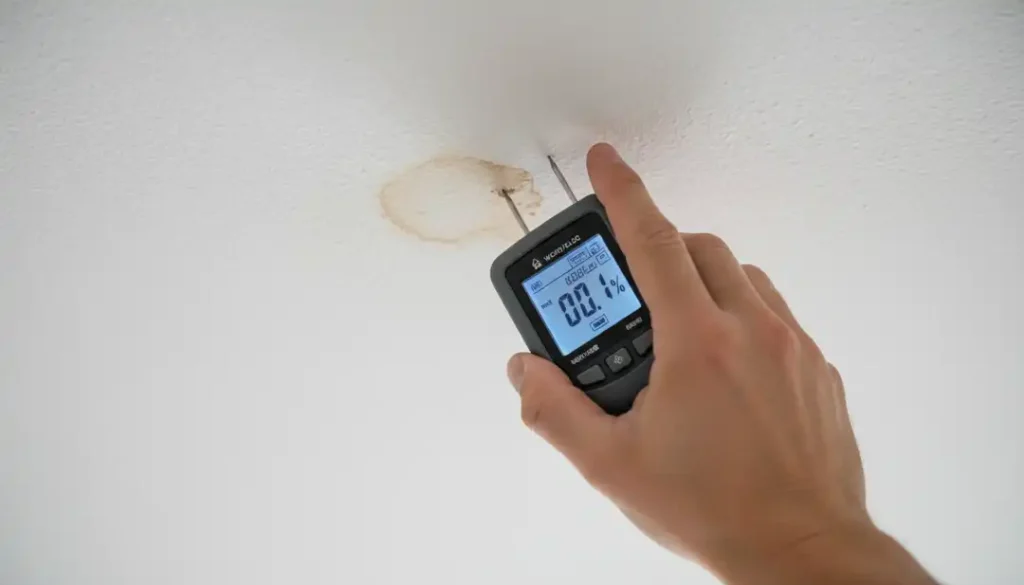
To properly deal with water stains after a roof repair, you must first verify the leak is 100% stopped, dry the area with fans if needed, and then apply a stain-blocking primer before painting. If you skip the primer, that yellow spot will bleed right through your new paint.
When the Roofer Blames Construction
It is frustrating when a roofer says your “old building” is the reason their repair didn’t work. You have to figure out if they are being honest or just dodging a warranty claim.
- Ask for photos of the specific “design flaw” they are talking about.
- Request a written explanation of why this wasn’t mentioned in the initial bid.
- Get a second opinion from an independent consultant if the leak keeps coming back.
If a roofer blames “old construction” or “design issues” for recurring leaks, you should handle it by reviewing the original contract to see if they accepted the “as-is” conditions and by demanding they prove how the flaw specifically bypassed their new work.
A roofer is likely dodging responsibility if the leak is in the exact same spot they “fixed” and they didn’t warn you about “design issues” before taking your money. A legitimate flaw usually involves water traveling from a different, higher point that wasn’t part of the original project scope.